Long before anyone drew a line through the subcontinent, Hindus and Muslims across India prayed at the same shrines, sang each other's devotional songs, spoke a language they built together, and produced a culture that belonged to neither alone. It wasn't a fairy tale of perfect peace — but it was real, and it was ours.
Walk into the shrine of a Sufi saint in India on any given evening — Ajmer, or Nizamuddin in Delhi — and you will still see it, if you know to look: Hindus and Muslims side by side, tying threads, offering flowers, asking the same saint for the same things. No one at the door checks your religion. For centuries, across huge stretches of India, this was not the exception. It was the texture of ordinary life.
We are increasingly taught a different story — that Hindus and Muslims are ancient enemies who merely paused between rounds. It’s worth remembering, in detail, how much that story leaves out.
The devotion that ignored the boundaries
From roughly the medieval period, two great spiritual currents swept across India and, crucially, kept spilling into each other. On the Hindu side, the Bhakti movement preached a direct, personal, emotional love of the divine that brushed aside priestly hierarchy and caste. On the Muslim side, Sufism preached a mystical, ecstatic love of God that brushed aside orthodoxy and empire.
They rhymed. And their followers noticed. Bhakti poet-saints and Sufi mystics drew from the same well of longing, sometimes borrowed each other’s imagery, and drew devotees across the supposed divide. The poet Kabir — claimed by Hindus and Muslims alike, and comfortably by neither — mocked the pretensions of temple and mosque in the same breath, insisting the divine was found in the heart, not the label. Millions listened.
This was not tolerance in the thin, modern sense of grudging coexistence. It was something warmer: a shared devotional world in which a Hindu weaver could follow a Muslim saint and a Muslim could sing of Krishna without anyone finding it strange.
An emperor who tried to hold it together
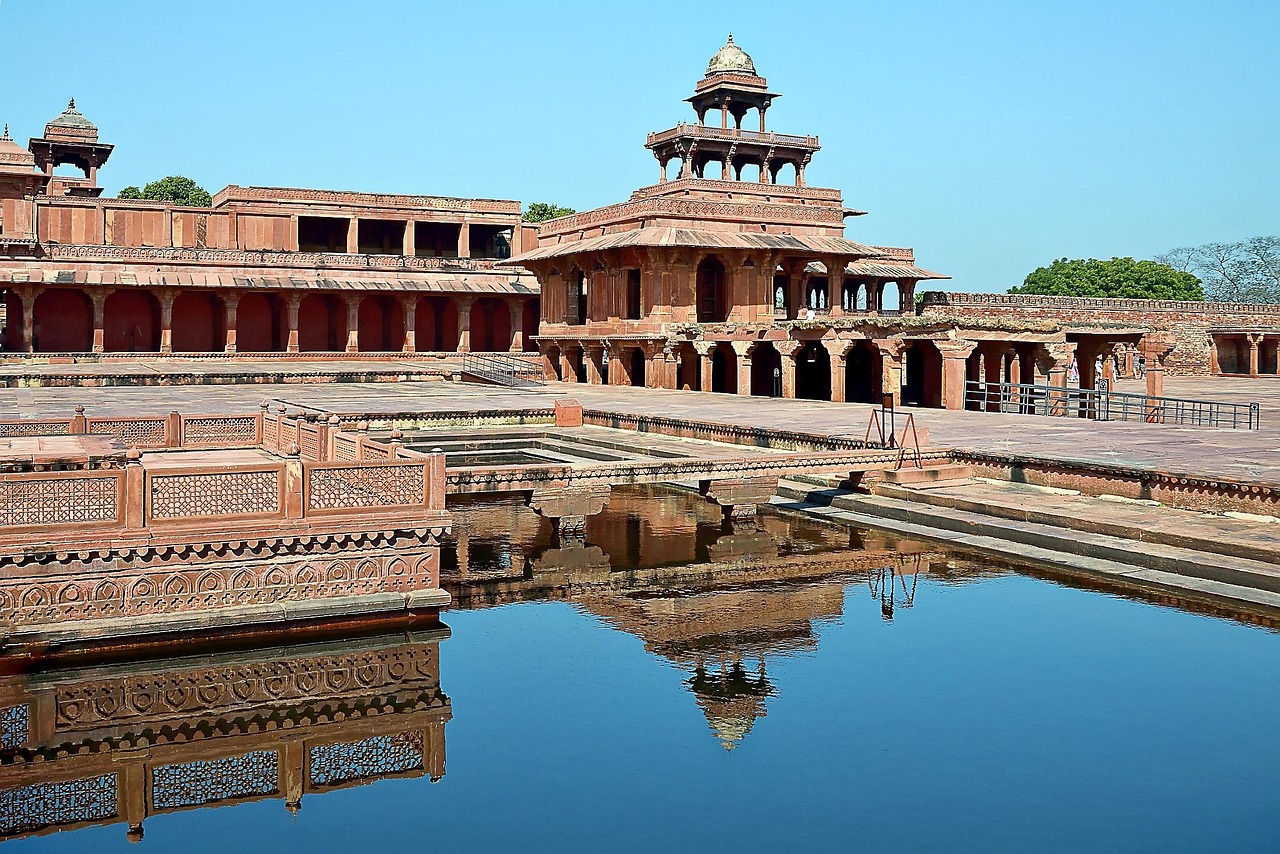
At the top of society, too, there were serious attempts to build a genuinely shared realm. The Mughal emperor Akbar, in the sixteenth century, pursued a deliberate policy of tolerance — sulh-i-kul, “peace with all.” He abolished the hated tax on non-Muslims, married across faiths, invited Hindu, Muslim, Christian, Jain, and Zoroastrian scholars to debate in his court, and tried, however imperfectly, to govern as an emperor of all Indians rather than of one faith.
Akbar was a conqueror, not a saint, and his experiment didn’t outlast his dynasty’s later rulers. But it shows that the idea of a plural, shared India is not a modern fantasy imported from the West. It was imagined and, in patches, built, on Indian soil, centuries ago.
A language, a music, a way of living
The most beautiful evidence is the culture that simply cannot be sorted into “Hindu” or “Muslim,” because it was made by both.
There is the language sometimes called Hindustani — the everyday tongue that became Hindi and Urdu, grown from the same roots, sharing the same streets. There is the music: the qawwali that fills a Sufi shrine, the classical traditions that Hindu and Muslim masters developed together across generations of teacher and student. There are the festivals where neighbours of one faith joined the celebrations of the other as a matter of course. In the north this shared civilisation even had a name — Ganga-Jamuni tehzeeb, after two rivers that flow into one.
The honest caveat that makes it stronger
Here is where a serious account parts ways with propaganda. This was not a thousand-year utopia. There were wars between rival kings who happened to hold different faiths. There were rulers who destroyed temples and rulers who patronised them, sometimes the same ruler. There was real persecution and real bigotry. Anyone who tells you pre-colonial India was a seamless paradise of brotherhood is selling something.
But — and this is the point — coexistence and syncretism were not the fragile exception. Across vast reaches of time and geography, Hindus and Muslims lived intertwined lives, shared saints and songs and streets, and produced a common culture. Conflict happened; so did centuries of the ordinary miracle of people simply living together.
Why remembering this is an act of resistance
If you believe Hindus and Muslims have always been at war, then dividing them, distrusting them, setting them against each other feels like realism — just the natural order reasserting itself. That belief is enormously useful to anyone who profits from division, which is exactly why it is pushed so hard, by different people, on all sides.
The shared world was real. The saints were shared, the songs were shared, the language was built together. Remembering that clearly — neither romanticising it into a myth nor letting it be erased — is not nostalgia. It is a way of refusing the lie that people who lived together for a thousand years were only ever waiting to tear each other apart.
Sources & further reading
Researched and written with the help of AI tools and edited for accuracy. Provided for general information and discussion only — not professional advice. See our editorial standards and disclaimer. Spotted an error? Tell us.
Enjoyed this? Get the next one.
One good read at a time, straight to your inbox. No spam, unsubscribe anytime.