Photo: PublicDomainPictures / Pixabay
For centuries India clothed the world in cotton so fine it was named after morning dew. Within a lifetime of British rule, the looms fell silent, a great city emptied, and the country that invented the global textile trade was forced to buy its cloth from Manchester. Here's how it was done — and one famous horror story that isn't true.
There was once a cloth so fine you could pass a bolt of it through a ring. Woven on the banks of the river near Dhaka, it was named for the things it resembled: baft-hawa, “woven air”; shabnam, “evening dew,” because a length of it laid on wet grass at dawn would vanish against the water. Emperors wore it. It travelled to Rome, to Cairo, to the courts of Europe.
Dhaka muslin was, by any measure, one of the supreme achievements of human craft. And within a century of the British East India Company taking control of Bengal, it was essentially extinct — the skill lost, the weavers scattered, the city that made it a fraction of its former size.
That was not the invisible hand of the market. It was policy.
The workshop of the world
To understand the scale of what was destroyed, you have to abandon the image of a poor, pre-industrial India waiting to be modernised. In the early 1700s, India was a manufacturing superpower — by some estimates producing around a quarter of the world’s textiles. Its cottons and muslins were the most sought-after fabrics on earth, and Bengal was the beating heart of the trade.
Britain, at that point, could not compete. Its own textile makers spent years lobbying to keep Indian cloth out, because it was simply better and cheaper. That’s the detail worth sitting with: the relationship began with Britain trying to protect itself from Indian industry, not the other way around.
How you strangle an industry with paperwork
The reversal, when it came, was engineered through the dullest weapon imaginable: the tariff schedule.
As the Company and then the Crown took control, the rules were rewritten to run in one direction. British machine-made cloth was allowed into India at trivial duties — as little as 2 to 5 percent. Indian cloth going the other way, into Britain, was hit with punishing tariffs that ran as high as 70 to 85 percent, pricing it out of the very markets it had once dominated.
At the same time, the Company used its political power to squeeze the weavers directly — binding them into contracts that forced them to sell only to British buyers, at prices the buyers set. A weaver could be paid a pittance for work worth many times more, and had no one else to sell to.
Meanwhile, back in England, the Industrial Revolution was arming Britain with steam-powered mills that could flood India with cheap cloth. Indian weavers were now undersold in their own bazaars by machines — machines their own raw cotton, exported cheap, had helped to feed.
A city emptied
The human result was visible from space, so to speak — in the census. Dhaka, a thriving centre of hundreds of thousands of people built around its legendary looms, collapsed as the industry died. Its population is reported to have fallen from several hundred thousand in 1760 to around fifty thousand by the 1820s. A great manufacturing city hollowed out in two generations.
A British Governor-General of the era, surveying the wreckage, is famously said to have reported that “the bones of the cotton weavers are bleaching the plains of India.” Whether or not the phrasing is exact, the picture it paints — of a skilled working population destroyed — is not an exaggeration.
The horror story that isn’t true (and why the truth is worse)
If you’ve read about this before, you’ve probably encountered a chilling claim: that the British cut off the thumbs of Bengali weavers so they could never work again.
It’s a powerful image. It’s also almost certainly a myth — and good history means saying so. The story traces back to a single 18th-century Company employee, William Bolts, who wrote that some Bengali silk weavers, not muslin weavers, cut off their own thumbs — as a desperate protest against being coerced into Company work, not as mutilation inflicted by the British. Even that lone anecdote is doubted by historians.
Here’s the thing, though: the myth survives because it feels true — because it stands in for something real. You didn’t need to sever a single thumb to destroy the weavers of Bengal. Tariffs did it. Forced contracts did it. Cheap mill cloth did it. The bureaucratic, unbloody machinery of empire emptied a city and erased a craft as effectively as any blade. The invented atrocity is a stand-in for the documented one.
What was actually lost
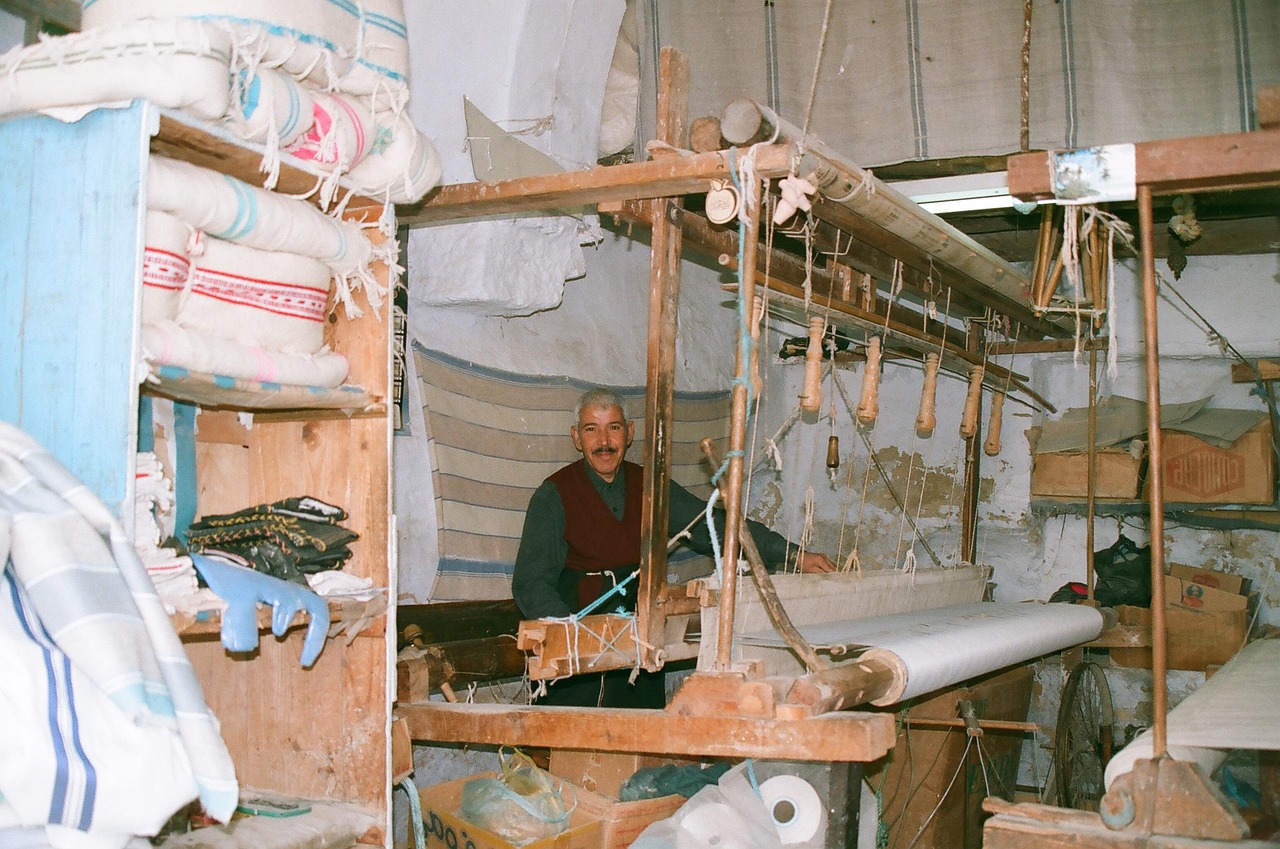
Dhaka muslin was not just a product. It was accumulated genius — generations of knowledge about a particular cotton plant, spun by hand at thread counts modern machines struggle to match, in humidity so specific the finest work could only be done at certain hours near the river. When the industry died, that knowledge died with it. In recent years, researchers have tried to reverse-engineer the fabric almost from scratch, because the living chain of expertise was broken.
That’s the quiet tragedy underneath the economics. Empires are often remembered for what they built. This is a reminder of what they unmade — a country that clothed the world, taught to buy its own shirts from a factory five thousand miles away.
Sources & further reading
Researched and written with the help of AI tools and edited for accuracy. Provided for general information and discussion only — not professional advice. See our editorial standards and disclaimer. Spotted an error? Tell us.
Enjoyed this? Get the next one.
One good read at a time, straight to your inbox. No spam, unsubscribe anytime.