Photo: KhanaBadosh / Pixabay
For two thousand years, South India made the finest steel on Earth — the raw metal behind the sword blades that terrified crusaders and baffled European scientists. Michael Faraday himself tried to copy it and failed. Then, in the colonial centuries, the knowledge quietly died. What was lost?
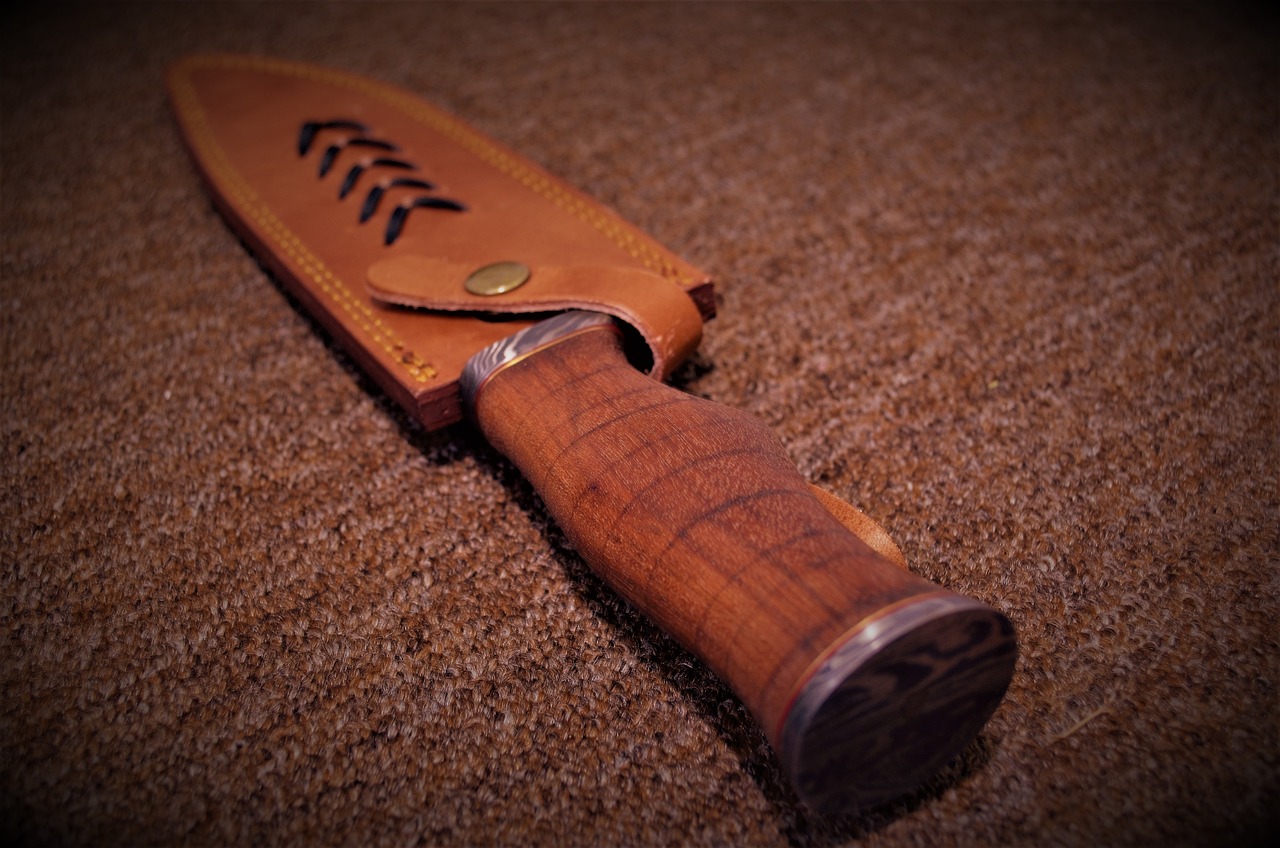
There is a kind of sword steel that European soldiers spent centuries fearing and European scientists spent centuries failing to reproduce. Its surface rippled with a watery, flowing pattern, like wind on a pond frozen into metal. It took an edge that seemed impossible and held it. Legend said the blades could cut a falling silk scarf in two, or slice through a lesser sword.
They called it Damascus steel, after the city where many of the blades were traded and forged. But Damascus didn’t make the steel. It only shaped it. The metal itself was smelted in furnaces two thousand miles away and shipped west in small, dull cakes — from the forges of South India.
The steel the world came to buy
The Indian metal was called wootz: a crucible steel, extraordinarily high in carbon, made in Tamil Nadu, Telangana, and Karnataka from at least 300 BCE — and quite possibly centuries earlier. Ironworkers sealed iron and carbon-rich material into clay crucibles and fired them until the contents melted and fused into a small ingot of astonishingly good steel.
Those ingots were a global commodity before “global commodity” was a phrase. They travelled to Persia and the Arab world, where smiths forged them into the blades that became famous as Damascus steel — the watered pattern emerging from the metal’s own internal structure as it was worked. For most of two millennia, if you wanted the best steel on Earth, you were buying Indian.
The scientist who couldn’t crack it
By the early 1800s, the wootz blade had become an obsession for European science. Here was a material that outperformed anything Europe’s own foundries could produce, and nobody in the West understood why. Reverse-engineering it became a prize.
One of the people who took a run at it was Michael Faraday — the blacksmith’s son who would go on to become one of the greatest experimental scientists in history. Working with a cutler named James Stodart, Faraday studied wootz intently and, in 1820, published his findings. He was wrong. He guessed that the magic came from tiny additions of substances like aluminium oxide and silica. It didn’t.
That failure is the point. One of the finest scientific minds of the age, with the full toolkit of early industrial chemistry, could not figure out how ironworkers in southern India had been routinely making this steel for two thousand years. The Indian smiths held knowledge that the leading edge of European science could not decode.
The secret was smaller than anyone could see
We now know Faraday never had a chance — because the answer lay at a scale his instruments couldn’t reach. A 2006 study in Nature examined a genuine Damascus blade and found, woven into its structure, features at the nanoscale: carbon nanotubes and fine wires of iron carbide, an architecture that helps explain the blade’s remarkable strength and edge.
The Indian process wasn’t producing this by understanding nanotubes, of course. It was the product of a specific ore — carrying just the right trace elements — combined with a precise, hard-won ritual of heating and cooling, refined across generations of craft. Get the ore and the rhythm right, and the metal organised itself into a structure no European foundry could match. Get them slightly wrong, and you got ordinary steel.
How a two-thousand-year craft went silent
Which is also why it was so fragile. Sometime between roughly 1750 and 1850, the making of true Damascus steel died out. The blades in the world’s museums are the last of a line that simply stopped.
Historians still debate the precise cause. Part of it is metallurgical bad luck: the particular ore deposits that carried the crucial trace elements appear to have been worked out, and once the raw material changed, the old recipes no longer produced the old magic. But that mineral story sits inside a larger economic one. The centuries in which the craft flickered out were the centuries of colonial rule, when India’s traditional industries — its textiles, its metalworking, its artisan economy — were steadily hollowed out. Trade patterns were redrawn to serve an empire, and cheap, mass-produced British steel flooded a market that Indian crucible smiths had owned for two millennia. The furnaces that had supplied the world went cold, and the knowledge in the smiths’ hands died with them, unwritten.
What “lost” really means
We tend to picture technological progress as a ratchet — one-way, always climbing. Wootz is a reminder that it isn’t. Here was a material humanity could make in 300 BCE and could not make in 1850, a capability that existed, spread across the world in the form of priceless blades, and then simply vanished, taking its makers’ hard-won intuition with it.
The steel that armed empires and stumped Faraday came out of Indian furnaces for two thousand years. And then, in the space of a couple of colonial lifetimes, one of the oldest high technologies on Earth was allowed to burn down to nothing — and nobody thought to write down how it worked.
Sources & further reading
Researched and written with the help of AI tools and edited for accuracy. Provided for general information and discussion only — not professional advice. See our editorial standards and disclaimer. Spotted an error? Tell us.
Enjoyed this? Get the next one.
One good read at a time, straight to your inbox. No spam, unsubscribe anytime.