In June 1979, a Pemex exploratory well called Ixtoc I blew out in the Bay of Campeche. It gushed until the following March, fouled 165 miles of Texas coast, and became one of the two largest accidental marine oil spills in history. Then its owner said one word — immunity — and walked away. Thirty years later, the Gulf watched almost the same well fail again.
Deepwater Horizon flowed for 87 days and cost BP more than $60 billion.
Thirty-one years earlier, in the same sea, a well called Ixtoc I flowed for 290 days — and the total ever recovered by American claimants was about $4.14 million. Not from the company that owned the well. That company never paid the United States a cent.
This is the spill that rehearsed the disaster, and then got forgotten.
The well that wouldn’t stop
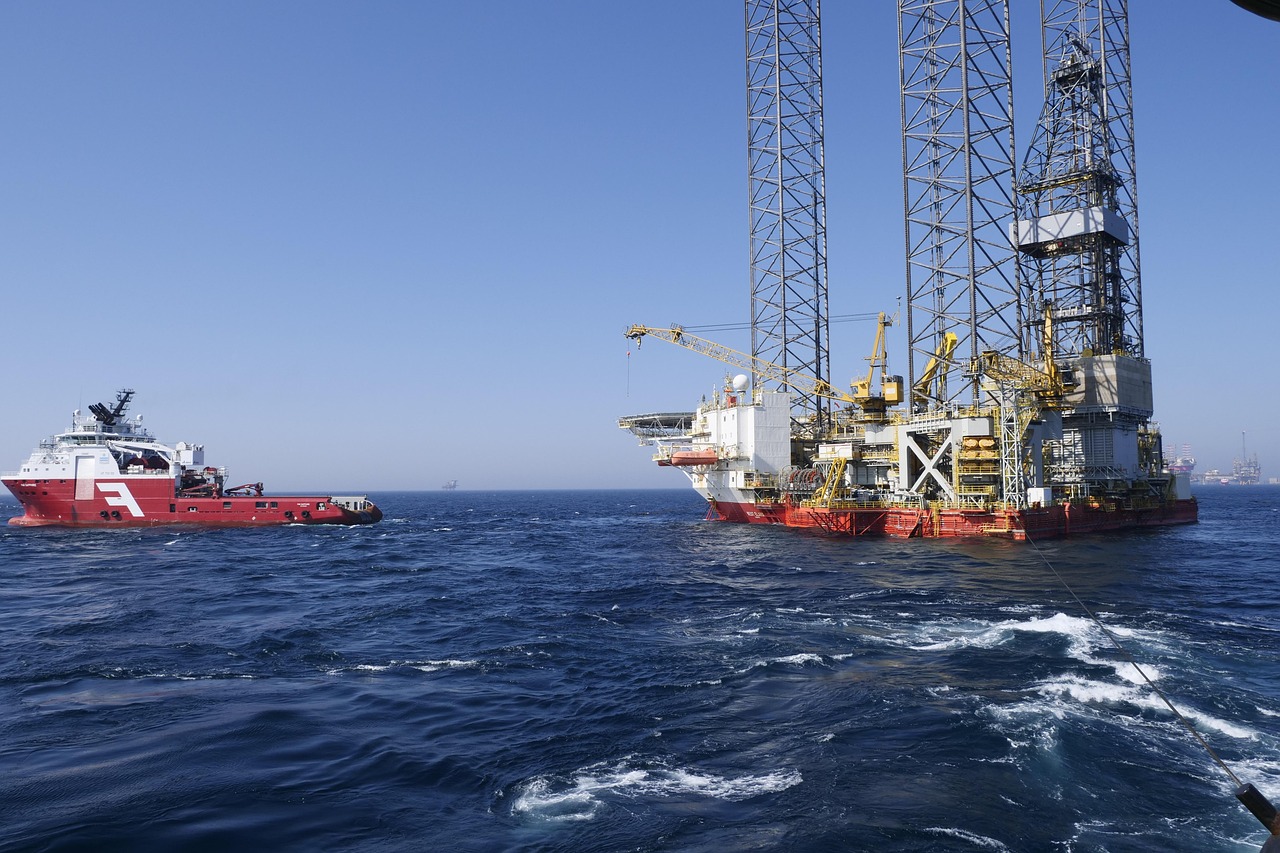
On 3 June 1979, the semi-submersible rig SEDCO 135 was drilling an exploratory well for Pemex, Mexico’s state oil company, in the Bay of Campeche — about 50 metres of water, roughly 600 miles south of Texas.
Then the drilling mud stopped circulating.
Anyone who followed Deepwater Horizon knows what comes next, because it is the same sentence. Mud is the weight that holds a well down. Lose circulation, and the pressure below comes up. It came up through the drill pipe, reached the rig, and ignited. The blowout preventer — the last-resort shear that is supposed to bite the pipe in half and seal the hole — did not save them. The rig burned and sank.
A mile of water and three decades separate Ixtoc from the Macondo well. The failure chain does not separate them at all.
Everything they tried, and everything that failed
The well ran at 10,000 to 30,000 barrels a day, according to NOAA, into water shallow enough for divers.
Pemex tried the whole catalogue. They pumped mud back down. They fired nearly 100,000 metal balls into the well bore, which cut the flow by roughly a third and no more. They brought in Red Adair, the Texan blowout legend. They built a containment cap — a steel cone the press nicknamed the “sombrero” — lowered it over the wellhead, and watched it fail; that September it was shipped back to the manufacturer as defective, for repair.
They drilled two relief wells to intercept the hole from the side and kill it with mud from below. They sprayed dispersants. They burned oil on the water. They strung booms and hired Norwegian skimmers.
The well was finally killed on 23 March 1980 — 294 days after it started, near enough to ten months.
Read that list again, then read the Deepwater Horizon response of 2010: junk shot, top kill, a containment dome, dispersants, and in the end the same answer — a relief well. In thirty years the industry’s playbook for a well that will not stop had barely changed. It had mostly gotten deeper.
The oil came to Texas
Estimates of the total put it around 3.3 million barrels — roughly 140 million gallons, though the honest answer is that nobody knows. A 2014 review in Frontiers in Marine Science puts it above 3.4 million barrels; Cedre, the French spill-response agency, records a range from 470,000 to 1.5 million tonnes and notes the true figure “will never be known exactly.”
Whatever the number, it puts Ixtoc and Deepwater Horizon as the two largest accidental marine spills in history, close enough that which one leads depends on whose estimate you take.
The oil took about two months to reach the United States. When it did, it fouled roughly 165 miles of Texas coastline — tar on South Padre Island, walkways laid over blackened sand, booms strung across the Laguna Madre. Only about 3% of the spill ever reached US beaches. Three per cent was enough to close a tourist coast for a season.
It also arrived at Rancho Nuevo, in Tamaulipas — effectively the only nesting beach on Earth for the Kemp’s ridley sea turtle, then down to a few hundred nesting females. Hatchlings were scooped up and airlifted past the slick to clean water. Nobody ever found out how many survived.
The governor who founded the rig company
Here is the detail that sounds invented.
The rig that blew out, the SEDCO 135, belonged to Sedco — the Southeastern Drilling Company. Sedco had been founded in 1947 by a Dallas oilman named Bill Clements.
In June 1979, Bill Clements was the sitting Governor of Texas. He had taken office five months earlier.
His shares were in a blind trust, and he denied that they shaped his response. What is on the record is the response itself. After touring the beaches near Port Aransas that August, the governor of the state about to be tarred called the whole thing “a big to-do about nothing.” He urged Texans to keep good relations with Mexico rather than sue.
Two weeks later the oil landed.
In 1982 Clements lost re-election to Mark White — the attorney general who had run the state’s lawsuit against Sedco. It is the rare case where the electorate priced the conflict of interest correctly, and the courts did not.
The word that ended it: immunity
Texas wanted about $10 million for public cleanup. Federal demands ran past $400 million. Lawsuits from south Texas communities — fishermen, shrimpers, hotels, boat owners — totalled close to $365 million.
Against Pemex, all of it hit a wall, and the wall had a name: the Foreign Sovereign Immunities Act.
On 30 March 1982, Judge Robert O’Conor of the Southern District of Texas held that Pemex — an arm of the Mexican state — could not be sued in an American court over Ixtoc. The court found the decision to drill an exploratory well was not commercial activity but a sovereign act: Mexico deciding what Mexico’s own resources were. The claims were dismissed with prejudice.
The ruling wobbled. In 1984 O’Conor vacated it and carried the question to trial, having noticed something awkward — Pemex’s own drilling programme described the objective as finding hydrocarbons in commercial quantities. That is a hard sentence to square with “not commercial.”
It didn’t matter. No American claimant ever collected from Pemex. Mexico spent perhaps $100 million cleaning up its own coast and paid the United States nothing.
Do the arithmetic
What did get paid came from Sedco — the contractor, not the operator.
In March 1983 Sedco paid the US Justice Department $2 million to settle federal claims that had sought around $12.5 million. In June 1983 it paid $2.14 million to the fishermen, crabbers, shrimpers, boat owners, hotels and developers of the south Texas coast — of which roughly $700,000 went to their lawyers.
Total: about $4.14 million, against some $365 million sought. Call it one cent on the dollar.
Now set it beside the series so far. Exxon Valdez: a $5 billion jury verdict, ground down over nineteen years to roughly $507 million. Deepwater Horizon: $20.8 billion in a single civil settlement, on top of a $4 billion criminal resolution.
Ixtoc I: $4.14 million — and not one cent of it from the company whose well it was.
The variable that moved the number was never the volume of oil. It was who you could reach.
What the Gulf never told us
The cruellest part is that we cannot even say what it cost the sea, because nobody measured the sea first.
The Frontiers review is blunt about it: there was no pre-spill baseline to compare against, and so, thirty years on, the environmental changes caused by Ixtoc “still remain unanswered.” Research funding arrived late and thinly. The Gulf was left to be its own control group.
What is visible is suggestive rather than conclusive. Residual hydrocarbons settled into sediments and were taken up by filter feeders. Roughly a quarter of the oil is thought to have sunk to the seafloor. Shrimp landings in Campeche Sound fell from around 20,000 tonnes a year in 1970 to a few hundred tonnes in recent decades — a collapse with more than one plausible father, overfishing among them, which is exactly the problem when you have no baseline. Studies decades later found some species that suffered after Ixtoc had never rebounded.
That is not a story of recovery. It is a story of not knowing, which is the shape damage takes when nobody is liable enough to be made to look.
The lesson unlearned
Follow the company forward and the ending writes itself.
Sedco was sold to Schlumberger, became Sedco Forex, and in 1999 merged into a driller called Transocean — the company that, eleven years later, owned the Deepwater Horizon. (The Horizon itself came to Transocean by a separate route, the 2001 purchase of R&B Falcon; the through-line is corporate ancestry, not the same steel.) The lineage of the rig that blew out in 1979 runs, by merger, into the rig that blew out in 2010, in the same gulf, from the same failure — lost mud, a beaten blowout preventer, a cap that didn’t hold, and a relief well at the end of it all.
Between those two dates the Gulf of Mexico offered the industry a full-scale, ten-month, three-million-barrel demonstration of exactly how this goes wrong and exactly how little the answers work. It cost almost nothing to ignore. That was the tuition, and it was cheap: about $4 million, paid by the wrong company, to settle one per cent of the claims.
Deepwater Horizon’s $20.8 billion is usually told as the moment accountability finally arrived. Read against Ixtoc, it reads differently — less like justice than like an invoice for thirty years of not having been billed.
The Gulf sent the warning in 1979. Nobody had to pay it, so nobody had to read it.
Sources & further reading
- NOAA IncidentNews — IXTOC I; Bahia de Campeche, Mexico
- Frontiers in Marine Science — The environmental legacy of the Ixtoc-I oil spill in Campeche Sound, southwestern Gulf of Mexico
- Woods Hole Oceanographic Institution — Ixtoc I Oil Well
- University of Virginia Magazine — An Almost Forgotten Oil Spill: Remembering the Ixtoc I Oil Spill in the Gulf of Mexico
- Cedre — Ixtoc 1 spill record
- Complaint of Sedco, Inc., 610 F. Supp. 306 (S.D. Tex. 1984)
Researched and written with the help of AI tools and edited for accuracy. Provided for general information and discussion only — not professional advice. See our editorial standards and disclaimer. Spotted an error? Tell us.
Enjoyed this? Get the next one.
One good read at a time, straight to your inbox. No spam, unsubscribe anytime.