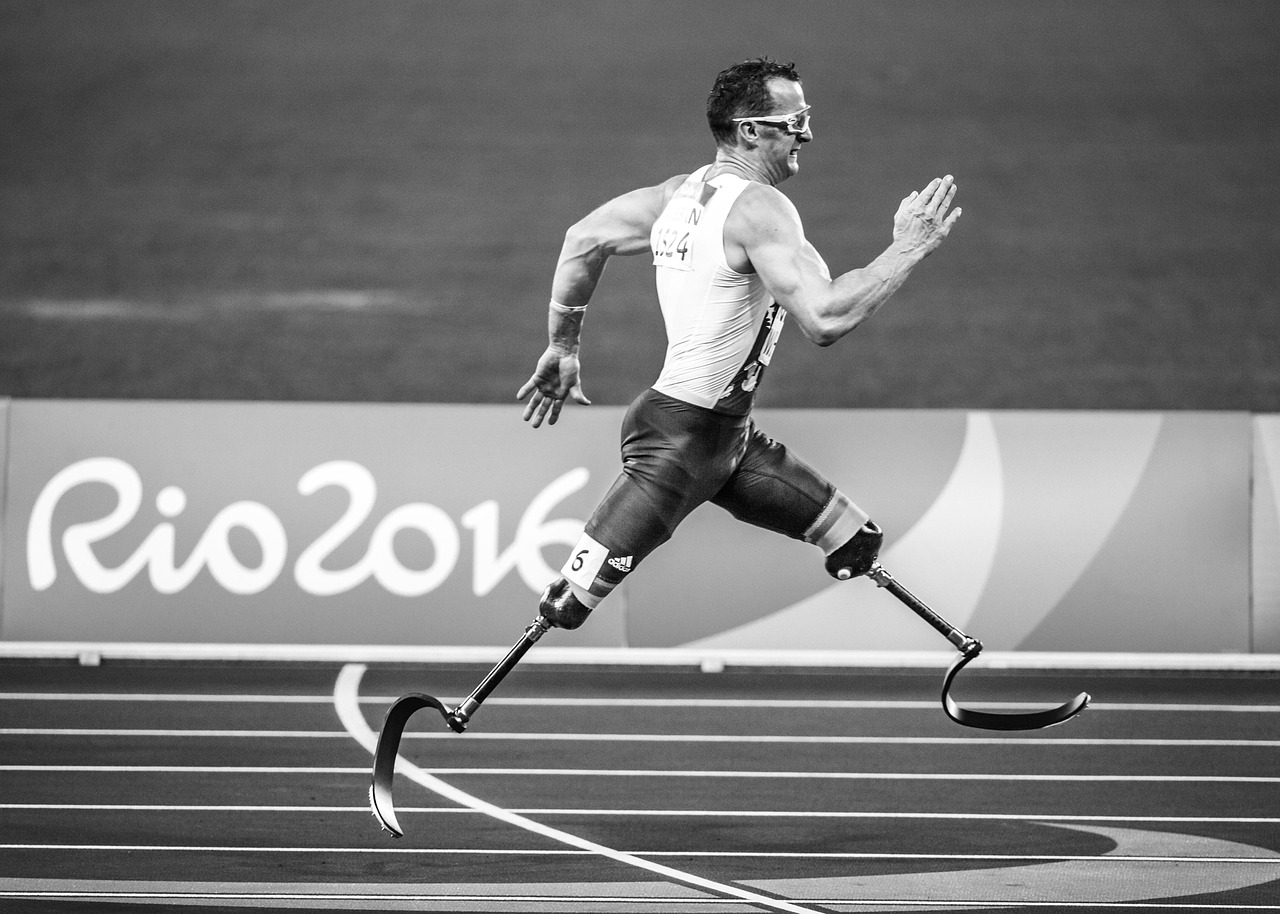
For decades, the dream of the bionic limb was control — a hand that moves when you want it to. But the harder, deeper problem was always the opposite direction: getting the limb to talk back to the brain, to send home the quiet stream of sensation that tells you where your body is. Researchers are finally cracking it, and the result is a prosthesis that starts to feel less like a tool and more like a limb.
Close your eyes and touch your nose. You didn’t have to look, or think, or aim. You know where your hand is because your body is constantly, silently telling your brain — a sixth sense called proprioception, the background hum of knowing your own limbs in space.
Now imagine losing a leg, and being handed a superb mechanical replacement. It fits, it’s strong, it even moves when you want it to. But it’s silent. It sends nothing back. Every step is a small act of concentration and faith, because your brain has no idea where the limb is except by looking at it. That silence — not the lack of movement — is the deepest problem in prosthetics, and it’s the one researchers are finally beginning to solve.
The easy direction and the hard one
Bionic limbs have always had two directions to conquer, and they are wildly unequal in difficulty.
The first is outgoing: reading the user’s intention and moving the limb. This is genuinely hard, but it’s the part that’s advanced the most. Modern prostheses can pick up the electrical signals of muscles in the residual limb, and increasingly interpret nerve signals, to let a person open a hand or flex a knee more or less by thinking about it. Impressive — and incomplete.
The second is incoming: sending sensation back — pressure, position, the feeling of the ground pushing up through your heel. This is the brutally hard direction, and for most of prosthetics history it simply didn’t exist. The limb was a one-way street. You could command it, but it could never whisper back where it was or what it felt.
A one-way limb is a tool you operate. A two-way limb is a limb you inhabit. The whole game is closing that loop.
Rewiring the body to talk to the machine
Some of the most striking work here comes out of MIT, from a team that has been rethinking the problem from the surgery up — not just building better hardware, but changing the body it plugs into so the body can carry a conversation.
One key idea is a surgical technique that reconnects pairs of muscles in the residual limb so that, as one contracts, the other stretches — the natural push-pull arrangement your muscles use throughout your intact body. That preserved tension does something remarkable: it keeps generating the sensory signals the brain expects, so the wearer gets a feeling of where the prosthetic limb is, not just command over it.
Pair that with osseointegration — anchoring the prosthesis directly to the bone rather than strapping it to soft tissue — and a channel for electrical signals to pass cleanly between limb and nervous system, and you have the makings of a genuinely two-way connection. In their recent work, the team built a bionic knee integrated into the residual limb’s bone and nervous system, and the effect on users went beyond better walking. People described the limb differently. It felt, they reported, more like part of them — not a device they wore, but a leg they had.
That sense of ownership has a clinical name, embodiment, and it may be the real prize. A limb the brain accepts as its own is one you don’t have to consciously pilot. You just move.
Why the “feel back” matters more than it sounds
It’s tempting to file sensory feedback under “nice to have” — the movement is the useful bit, surely, and feeling is a bonus. It’s the reverse.
Without feedback, walking on a prosthetic leg is exhausting cognitive labour: you watch the limb, you plan each step, you brace against a floor you can’t feel. With feedback, the loop that lets you walk without thinking begins to close. Balance improves. Movement smooths out. Falls — a genuine danger for prosthesis users — become less likely. The sensation isn’t decoration. It’s what turns a controllable machine into a usable limb.
And it points somewhere larger. A limb that both takes commands from the nervous system and sends signals back into it is, quietly, a two-way brain–machine interface built out of an arm or a leg — the same fundamental problem researchers are chasing with brain implants, approached from the far end of the body.
The line worth remembering
For a long time, the story of bionic limbs was told as a story of control: making the hand obey the mind. That was always only half the loop, and the easier half. The revolution now underway is on the return path — teaching the limb to speak back to the brain in the brain’s own quiet language of sensation.
Get that right, and you no longer have a person operating a very good machine. You have a person with a leg again — one that tells them, without a glance, exactly where it is. That’s not a better tool. It’s a limb that listens.
Sources & further reading
Researched and written with the help of AI tools and edited for accuracy. Provided for general information and discussion only — not professional advice. See our editorial standards and disclaimer. Spotted an error? Tell us.
Enjoyed this? Get the next one.
One good read at a time, straight to your inbox. No spam, unsubscribe anytime.