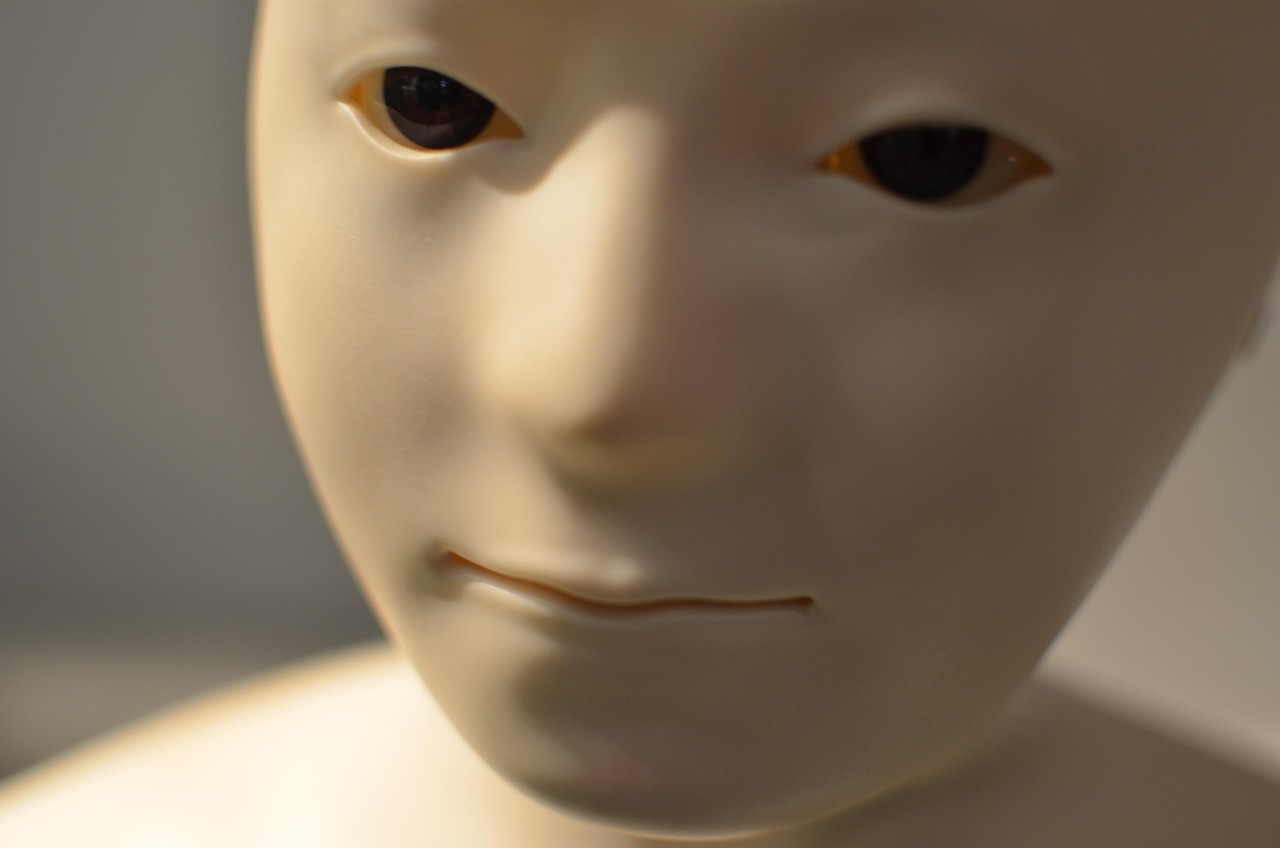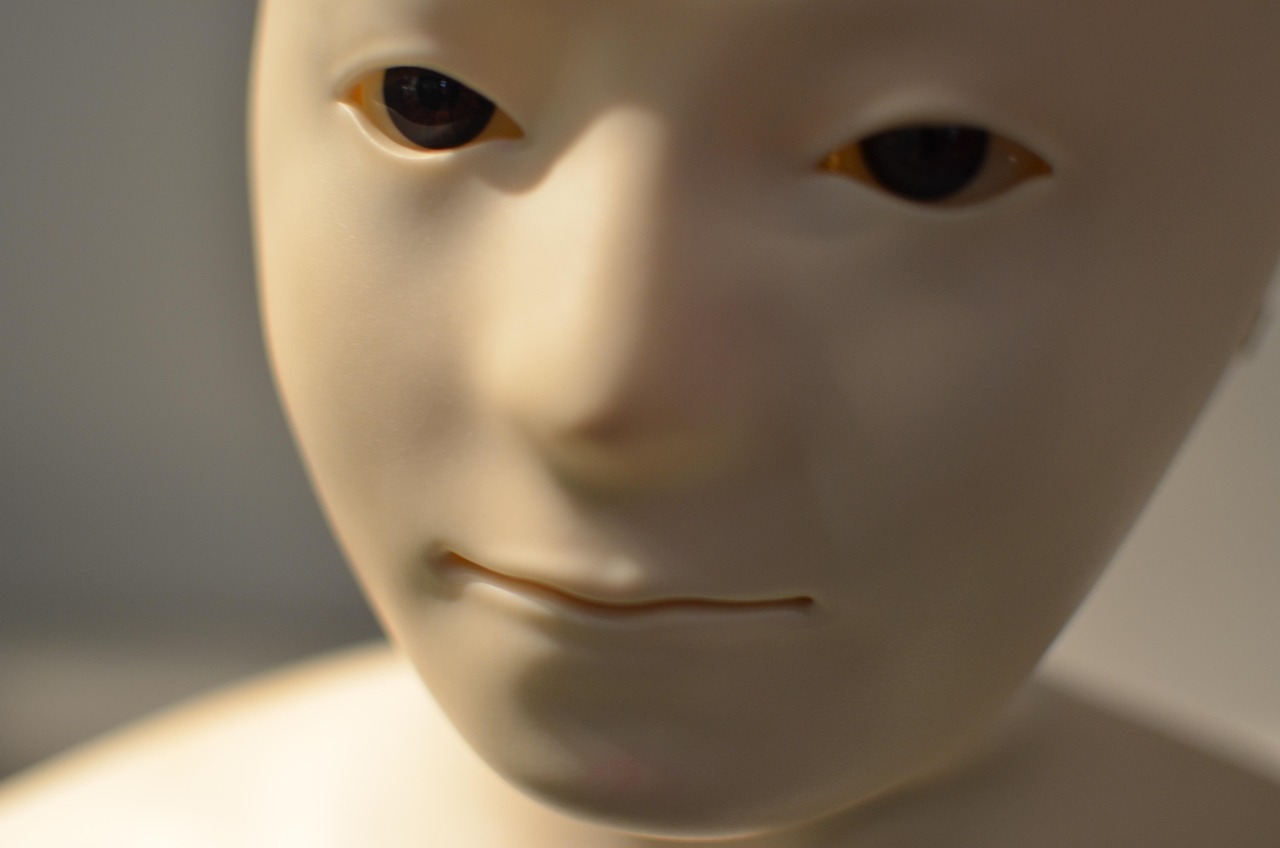
As humanoid robots pour into the world in 2026 — walking, gesturing, working beside us — an old dread is back: that queasy feeling when a machine looks almost, but not quite, human. We treat that feeling as a fixed fact of the human mind. It isn't. It's a trap engineers can choose to walk into, or step around. Most are finally choosing to step around it.
You know the feeling, even if you don’t know its name. A face that’s almost right, but something’s off — the eyes a fraction too still, the smile a beat too late — and a cold little wave of unease runs up your spine. Not fear exactly. Something stranger: revulsion at the almost.
That feeling has a name, and a birthplace. In 1970, a Japanese roboticist named Masahiro Mori described what he called the “uncanny valley” — the idea that as a robot becomes more humanlike, our affection for it rises, until it gets too close to human without quite arriving, at which point warmth collapses into dread. Plot it on a graph and there’s a sudden, sickening dip right before full humanness. A valley.
For half a century we’ve treated Mori’s valley as a kind of natural law — an inescapable feature of the human mind that dooms any near-human machine to creep us out. And now, with humanoid robots arriving in force, that assumption matters more than ever. It’s also wrong.
The robots are actually coming this time
First, the context. After decades of humanoid robots being a research curiosity — impressive lab demos that never left the lab — 2025 and 2026 have turned into something like a stampede.
Boston Dynamics rebuilt its famous Atlas as an all-electric machine and pointed it at real work. Tesla is pushing Optimus. Startups like Figure, and Agility Robotics with its Digit, are putting two-legged robots into warehouses and onto factory floors. Suddenly the two-legged, two-armed, roughly-person-shaped robot isn’t a demo. It’s a product category, and it’s about to be in workplaces alongside people who never signed up to share a shift with a machine that walks like them.
Which drags the uncanny valley out of the seminar room and into the break room. If these things unsettle the humans around them, they fail — no matter how capable they are.
What Mori actually said — and what we forgot
Here’s the part that gets lost. Mori’s valley was never a wall. It was a map — and like any map, it shows you both the ditch and the roads around it.
Read his idea carefully and it’s really a warning about a specific mistake: chasing realism. The unease spikes precisely when a machine reaches for full human likeness and misses. A robot that’s obviously, comfortably mechanical — think of the friendly, cartoonish machines people happily coo over — sits safely on the near slope of the valley, before the drop. It’s the ones straining to pass as human, and failing in small wrong ways, that fall in.
That reframes everything. The valley isn’t a fact you’re stuck with. It’s a consequence of a design choice: how human are you going to try to look? Aim for photorealistic skin and lifelike eyes, and you’re betting you can clear the far wall perfectly — and any imperfection dumps you into the ditch. Aim for stylised, honest, obviously-a-robot, and you never approach the edge at all.
The industry finally took the hint
Watch the current wave of humanoids and you’ll notice something: most of them are not trying to look like people. They have visored, screen-like faces instead of synthetic flesh. Smooth, panelled bodies that read as “sophisticated appliance,” not “artificial human.” Movement that’s competent and legible rather than eerily lifelike.
That’s not a failure of ambition. It’s the lesson learned. The companies serious about putting robots next to humans, day in and day out, have largely decided not to fight their way across the uncanny valley — because there’s no prize on the other side worth the risk of the fall. A warehouse robot doesn’t need a convincing human face. It needs to be capable, predictable, and pleasant to be near. Friendly-machine beats fake-human every time.
The places still chasing perfect human likeness tend to be the ones where the illusion itself is the product — film effects, certain kinds of companion robots — and those are exactly the places that keep tumbling into the valley and unnerving people, because they’re taking the one path Mori warned about.
The real takeaway
There’s a lovely bit of intellectual freedom in this. We tend to think of our gut reactions as immovable — the uncanny shudder as something done to us by biology. But the shudder is a response to a choice someone else made about how a machine should look. Change the choice, and the shudder never comes.
As the humanoids arrive, the ones that end up in our workplaces and eventually our homes won’t be the ones that most convincingly fake being human. They’ll be the ones designed, deliberately, to sidestep a fifty-year-old valley that was never a law in the first place — just a warning we’re finally learning to heed.
Sources & further reading
Researched and written with the help of AI tools and edited for accuracy. Provided for general information and discussion only — not professional advice. See our editorial standards and disclaimer. Spotted an error? Tell us.
Enjoyed this? Get the next one.
One good read at a time, straight to your inbox. No spam, unsubscribe anytime.