A train now crosses a Himalayan gorge 359 metres above the river — higher than any railway bridge on Earth. It's one of a half-dozen record-breaking spans, tunnels, and sea links India quietly built while the world was looking elsewhere. A guided tour of the most jaw-dropping.
Picture this. You are on a train in the Himalayas, and you look out the window, and there is no window’s worth of anything — just air. Below you, so far down it looks like a thread, runs the Chenab River. You are 359 metres above it. That is higher than the top of the Eiffel Tower, and you are crossing it on a railway line.
That bridge is real, it opened in June 2025, and it is the single most photogenic entry in a story most of the world has managed to miss: over roughly the last decade, India has been quietly building infrastructure that breaks world records. Not one showpiece. A whole run of them — the highest railway bridge on the planet, a sea bridge longer than 21 kilometres, a tunnel bored clean under the Himalayas, a railway bridge that lifts out of the way of ships.
Here is the guided tour. One marvel at a time, with the engineering problem each one had to beat.
The sky bridge: Chenab
Start with the one that stops conversations.
The Chenab Bridge, in the Reasi district of Jammu & Kashmir, is the world’s highest railway arch bridge — its deck sits 359 metres above the river, which makes it about 35 metres taller than the Eiffel Tower. Trains started running across it when Prime Minister Modi inaugurated it on 6 June 2025.
The numbers underneath the headline are just as absurd. It’s a steel-and-concrete span 1,315 metres long, carried by a single steel arch that reaches 467 metres from footing to footing — one of the longest arch spans ever built. The engineers designed it to shrug off winds up to 266 km/h, earthquakes up to magnitude 8, and even a blast of explosives, with a rated life of 120 years.
The engineering problem here wasn’t really the height. It was the place. The Chenab gorge is steep, seismic, wind-blasted, and — in a region with a long security history — the bridge had to be built to survive sabotage as well as nature. There were no roads to the site, so crews had to carve mountain tracks just to haul steel to the pillars, then hang the two halves of the arch out over the void on cables until they met in the middle. It closed the last, hardest gap in a railway line meant to connect the Kashmir Valley to the rest of India’s network for the first time.
The one over the sea: Atal Setu
Now come down from the mountains to the water.
Atal Setu — formally the Mumbai Trans Harbour Link — is India’s longest bridge and longest sea bridge, running 21.8 km from Sewri in South Mumbai across Thane Creek to the mainland near Nhava Sheva. Of that, about 16.5 km is out over open water. It opened on 12 January 2024 after roughly six years of construction, at a cost in the region of ₹17,800 crore (around US$2 billion).
Globally it ranks around the world’s 12th-longest sea bridge — so no, not the longest on Earth (that title sits with China’s giant crossings) — but it’s comfortably the longest India has ever laid. The six-lane deck is built to move up to 70,000 vehicles a day, and it collapses a slog that used to take about two hours in Mumbai traffic into a 15-to-20-minute glide.
The challenge with a sea bridge isn’t spanning the gap; it’s building at all in a live marine environment — pile foundations sunk into a seabed, construction that can’t disturb the flamingo habitats and mudflats of Thane Creek, and a structure engineered against salt, tides, and the Arabian Sea’s moods. It is the kind of project that is invisible when it works and impossible to ignore when you’re stuck in the traffic it replaced.
The one under the Himalayas: Atal Tunnel
Some marvels don’t go up or across. They go through.
The Atal Tunnel, under the Rohtang Pass in Himachal Pradesh, is the world’s longest highway tunnel above 10,000 feet (about 3,000 m). It runs 9.02 km beneath the Pir Panjal range on the Manali–Leh road, and it opened on 3 October 2020.
Before it existed, the Lahaul-Spiti valley on the far side was cut off from Manali for roughly six months a year — snowed shut, no way in or out over the pass. The tunnel makes that road all-weather, shaves about 46 km off the journey, and turns a four-to-five-hour mountain crawl into a ten-minute drive in the dark.
Boring a horizontal tunnel at that altitude is a specific kind of hard. The rock is unstable, oxygen is thin for the crews, and the diggers hit the notorious Seri Nullah — a waterlogged fault zone that flooded the works and stalled progress for years. What should have been a few seasons of tunnelling stretched to a decade. But the payoff is a strategic, all-year link toward Ladakh that used to close every winter.
The one that lifts: New Pamban
Down at the opposite end of the country, off the coast of Tamil Nadu, is the cleverest of the lot.
The New Pamban Bridge connects the mainland at Mandapam to the temple town of Rameswaram on Pamban Island, and it’s India’s first vertical-lift railway sea bridge. It’s 2.07 km long, and its trick is a central span that doesn’t swing or open sideways — it rises. A 72.5-metre section lifts straight up to 17 metres to let ships pass beneath, then drops back down for trains.
It opened on 6 April 2025, replacing the century-old original Pamban bridge from 1914 — a beloved but battered structure whose old manually-operated opening span had reached the end of its life in one of India’s most corrosive, cyclone-prone marine settings.
That corrosion is exactly the engineering problem. Sitting in salt spray on the seismically active Palk Strait, the new bridge uses heavily protected steel and a modern lift mechanism designed to outlast the sea for a hundred years. It’s the rare marvel you can watch do something — a slab of railway rising into the sky to make room for a boat.
The one that took 16 years: Bogibeel
Not every record is about being tallest or longest. Some are just about finishing.
The Bogibeel Bridge, over the mighty Brahmaputra in Assam, is India’s longest rail-cum-road bridge at 4.94 km — a double railway track on the lower deck and a three-lane road on top. It was inaugurated on 25 December 2018.
Its statistic isn’t a dimension; it’s patience. Construction began in 2002 and ran for more than 16 years, because building across the Brahmaputra — a braided, flood-prone, earthquake-zone river that shifts its own banks — is one of the harder civil-engineering assignments on the subcontinent. Bogibeel was built with fully welded steel spans meant to ride out serious quakes, and it stitched together long-isolated stretches of upper Assam and Arunachal Pradesh, cutting journeys that once meant a long detour or a ferry.
The one still being dug: Zojila
A quick honesty note, because a tour like this can start to sound like a highlight reel where everything is finished. This one isn’t.
The Zojila Tunnel, climbing toward Ladakh, is on track to be Asia’s longest bidirectional road tunnel — about 13.15 km at some 3,500 metres of altitude, aimed at keeping the strategic Srinagar–Leh route open through winters that currently shut the Zoji La pass for months. Crews achieved a major tunnelling breakthrough in June 2026, but it is not open yet: commissioning is targeted for around 2028, and the project has already slipped past earlier deadlines thanks to brutal terrain and weather. Worth watching. Not yet worth the past tense.
What it all adds up to
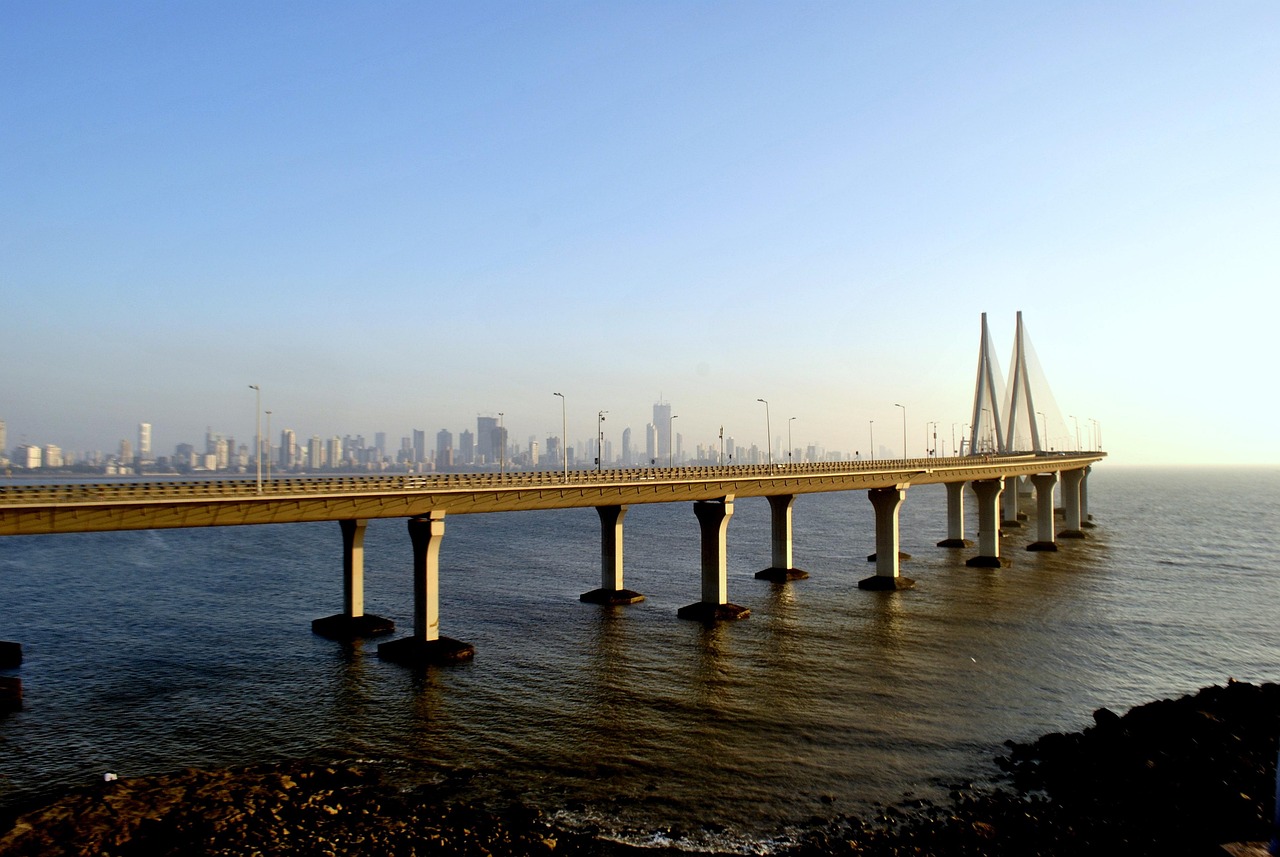
A couple more belong in the frame. Mumbai’s Bandra–Worli Sea Link — the elegant cable-stayed span that opened across open water in 2009–10 — was in many ways the prologue, the project that proved India could build this way. And in Gujarat stands the Statue of Unity, at 182 metres the tallest statue in the world, unveiled in 2018: less infrastructure than statement, but cut from the same ambition.
None of this is above debate, and it shouldn’t be. These projects run late and run over budget; the Himalayan ones raise real questions about fragile ecology and seismic risk; critics fairly ask whether the ribbon-cuttings sometimes outpace the maintenance. Big infrastructure is always partly an argument about priorities, and India’s is no exception.
But step back from the arguments and the pattern is hard to miss. A country long shorthand for potholes and delay has, in about ten years, planted its flag on a genuine set of world firsts — the highest railway bridge anywhere, a sea link into the double digits of kilometres, tunnels driven under mountains that used to close for half the year.
The striking thing isn’t any single span. It’s the run of them — the quiet accumulation of hard, unglamorous, record-setting engineering, built while most of the world’s attention was somewhere else entirely. Next time someone tells you nothing gets built anymore, point them at a train, 359 metres over a Himalayan river, and let them argue with the view.
Sources & further reading
- PIB — Salient Features of the Highest Railway Bridge on River Chenab (Ministry of Railways)
- Newsweek — World's Tallest Railway Bridge Opens With Trains 1,178ft Above the Ground
- India Briefing — Mumbai Trans Harbour Link (Atal Setu) Inaugurated: India's Longest Sea Bridge
- Border Roads Organisation — About the Atal Tunnel, Rohtang
- YourStory — India's First Vertical Lift Railway Sea Bridge Inaugurated in Rameswaram
- ThePrint — Bogibeel Bridge, India's Longest Rail-cum-Road Bridge, Opens in Assam
- Railway Technology — Chenab Bridge, Jammu and Kashmir project profile
Researched and written with the help of AI tools and edited for accuracy. Provided for general information and discussion only — not professional advice. See our editorial standards and disclaimer. Spotted an error? Tell us.
Enjoyed this? Get the next one.
One good read at a time, straight to your inbox. No spam, unsubscribe anytime.