We assumed the hard stuff for machines would be the hard stuff for us — logic, maths, strategy. It turned out to be the exact opposite. The things a toddler does without thinking are the things that still defeat the world's best robots.
A computer beat the world chess champion in 1997. Nearly thirty years later, no robot on Earth can reliably walk into an unfamiliar kitchen and make you a cup of tea.
Read that again, because it’s genuinely strange. The thing we consider the pinnacle of human intellect — grandmaster chess — fell to machines decades ago. The thing we don’t even think of as a skill — picking up a mug, filling a kettle, not knocking everything over — remains almost impossibly hard for robots.
This upside-down state of affairs has a name: Moravec’s paradox.
The hard things are easy and the easy things are hard
In the 1980s, the roboticist Hans Moravec and a handful of AI pioneers noticed something counterintuitive about what computers found difficult. High-level reasoning — logic, algebra, chess, the stuff that makes humans feel clever — turned out to be relatively easy to program. But low-level sensorimotor skills — seeing, walking, grabbing, balancing — were monstrously hard.
Moravec’s own summary, roughly: it is comparatively easy to make computers perform like an expert adult on an intelligence test, and nearly impossible to give them the perception and mobility of a one-year-old.
Every parent has watched a toddler do the “impossible” version without instruction. Reach out, grasp a toy, adjust grip, don’t crush it, don’t drop it. No robot does that as well as a distracted two-year-old.
Blame (and thank) evolution
The paradox has an elegant explanation, and it’s about time — deep time.
Abstract reasoning is new. Humans have been doing mathematics and formal logic for a few thousand years. As skills go, it’s barely out of the box, which means our brains haven’t had long to optimise it. It runs slow and effortful — which, conveniently, is the kind of step-by-step process a computer can copy.
Perception and movement are ancient. Your ability to see a scene, understand it instantly, and move a hand through it is the polished output of hundreds of millions of years of evolution across countless species. It feels effortless precisely because evolution spent an eternity making it effortless. All that hard-won machinery is buried below conscious thought, which is exactly why it’s so hard to reverse-engineer.
We built machines that are good at the things we find hard, because those are the things we actually understand how we do. We’re stumped by the things we find easy, because we have no idea how we do them.
Why your warehouse has robots and your home doesn’t
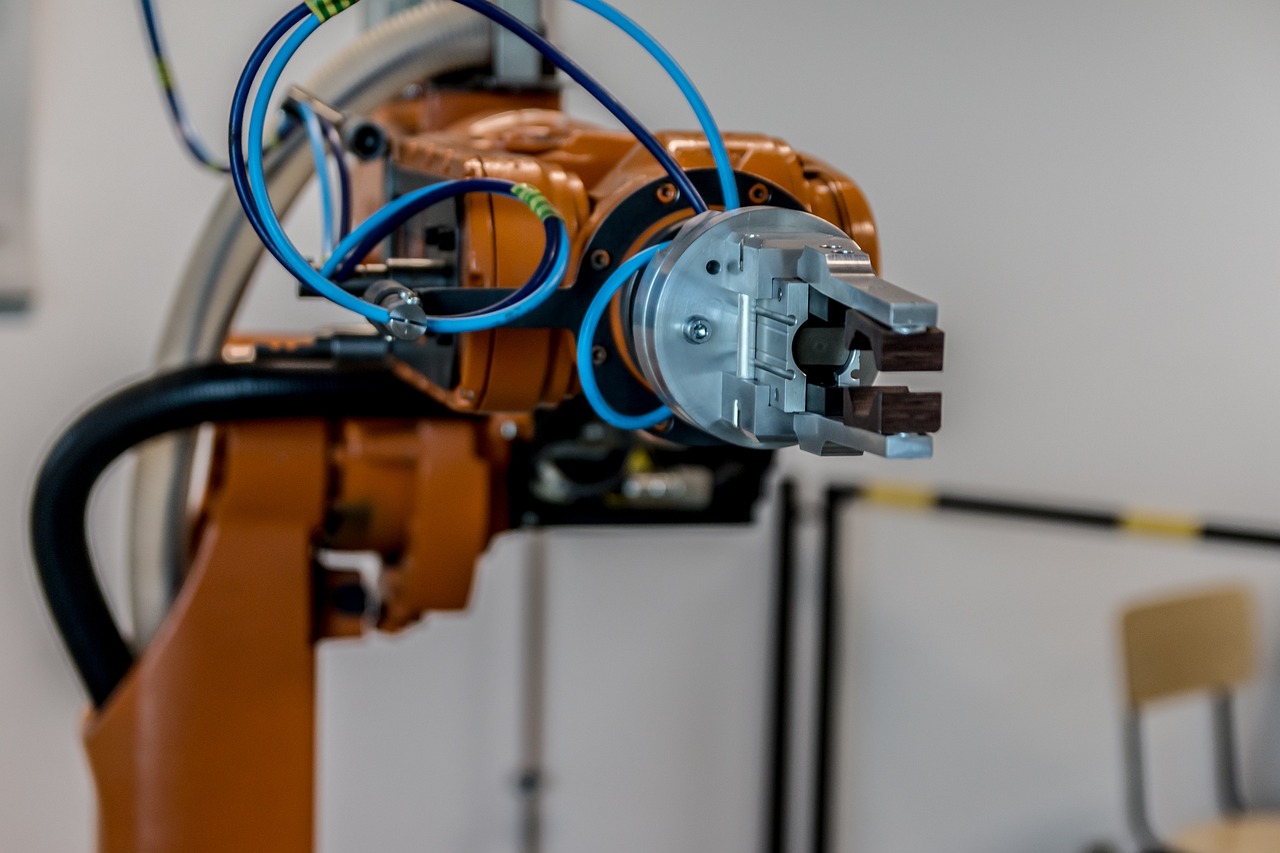
This is why automation arrived first in tightly controlled environments. A factory floor or a warehouse can be engineered around the robot — flat floors, known objects, fixed lighting, parts that arrive in the same place every time. Strip out the chaos, and manipulation becomes tractable.
The real world refuses to be controlled. A home is a nightmare of soft objects, weird lighting, clutter, pets, and stairs. Famously, a well-known robotics contest in 2015 asked advanced humanoid robots to do things like open doors and turn valves — and produced a blooper reel of million-dollar machines toppling over on national television. Not because the engineers were bad. Because the task was Moravec-hard.
What it means for the robot future
The lesson isn’t that home robots will never come. It’s that the order of arrival is the reverse of what science fiction promised. We got the “brain” — reasoning, language, strategy — long before we got the “body.”
So the automation wave is hitting cognitive, predictable, indoor work first: analysis, drafting, scheduling, sorting. The jobs that look “low-skill” from a desk — the ones full of messy physical improvisation, like nursing, plumbing, or clearing a cluttered table — are quietly among the hardest to automate.
Moravec’s paradox is really a compliment we forgot to pay ourselves. The most sophisticated thing you did today wasn’t anything you thought about. It was reaching over, without looking, and picking up your coffee without spilling a drop.
Sources & further reading
Researched and written with the help of AI tools and edited for accuracy. Provided for general information and discussion only — not professional advice. See our editorial standards and disclaimer. Spotted an error? Tell us.
Enjoyed this? Get the next one.
One good read at a time, straight to your inbox. No spam, unsubscribe anytime.