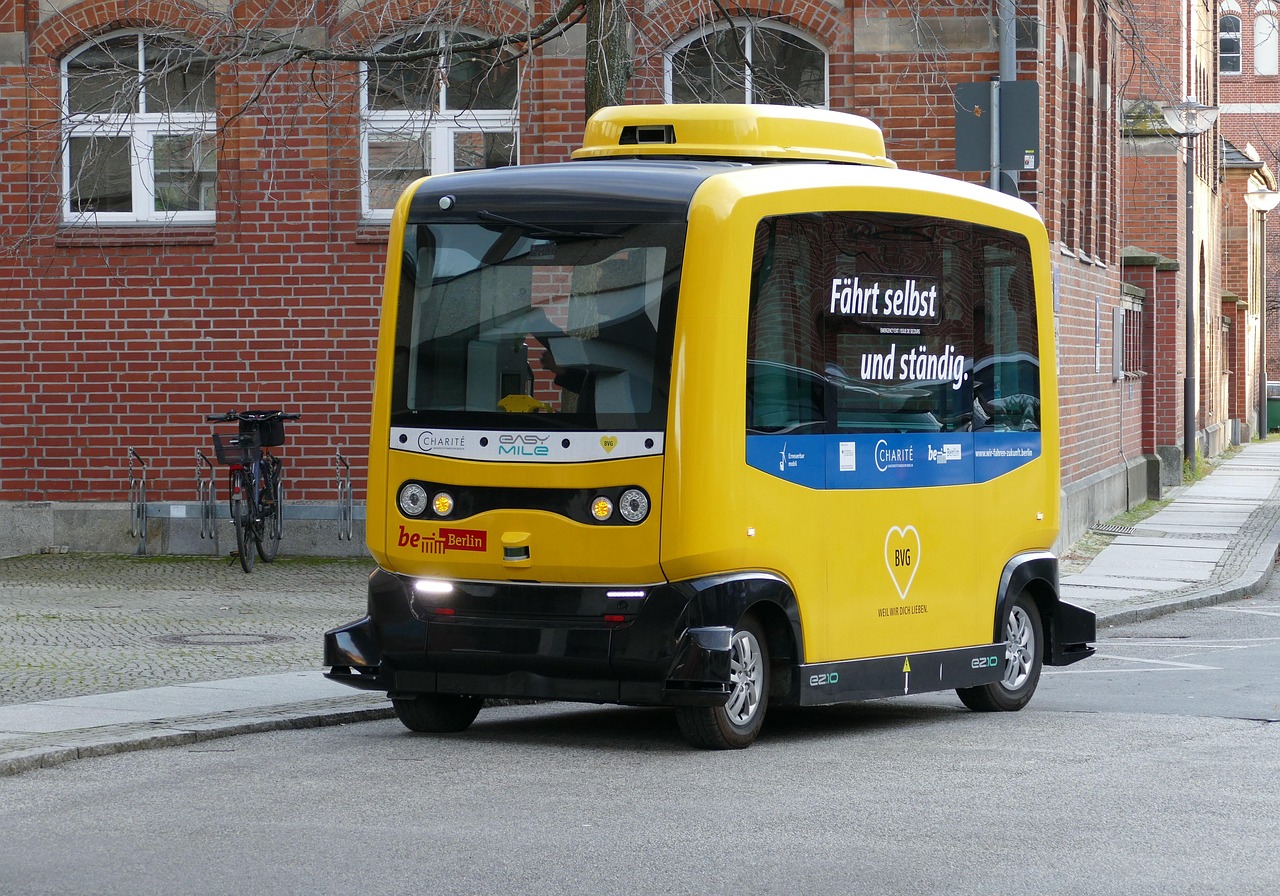
For a decade and a half, fully autonomous cars were the technology perpetually just over the horizon — always coming, never here. The joke wrote itself. And then, while everyone was busy being cynical, half a million people a week started climbing into cars with no driver. So which was true: the hype, or the skepticism?
There’s an old joke in the tech world: commercially viable fusion power is thirty years away, and always will be. For most of the 2010s, self-driving cars had their own version — perpetually “about five years away,” a promise renewed so many times it curdled into a punchline.
The skeptics had a point. Executives kept announcing that fully autonomous cars were nearly here, and they kept being wrong. 2018 came and went. 2020, the year several companies had circled for robotaxis “at scale,” arrived with almost nothing to show. Cynicism became the smart position.
And then something awkward happened for the cynics. The cars showed up.
Half a million rides a week, no one at the wheel
As of 2026, Waymo — the self-driving arm of Google’s parent company — is giving roughly half a million paid rides every week, in cars with nobody in the driver’s seat. Not a pilot. Not a safety driver with hands hovering near the wheel. An empty front seat, a fare, a destination, and a car that drives itself through real city traffic.
That number has doubled in under a year, and Waymo is openly targeting a million rides a week. The service runs in ten US cities — Phoenix, San Francisco, Los Angeles, Austin, and more — with a fleet of a couple of thousand robotaxis and expansion underway toward London and Tokyo.
So the “always five years away” line turns out to be both completely true and completely wrong. It was true right up until it wasn’t.
Why it took so long — and why that’s not a scandal
Here’s the thing the punchline missed: the hard part of self-driving was never the driving. It was the rare driving.
A car that handles 99% of situations sounds nearly finished. It isn’t — because the last 1% contains the entire problem. A plastic bag that looks like a rock. A police officer waving you through a red light by hand. A mattress in the fast lane. A construction zone where the painted lines contradict the cones. Fog, glare, a cyclist doing something no cyclist should do. Human drivers handle these with a lifetime of general-world intuition. A machine has to be explicitly ready for a near-infinite list of once-a-year events, any one of which can be fatal.
This is why progress looked so maddeningly slow. Getting to “impressive demo” is fast. Getting from “impressive demo” to “safe enough to remove the human, in the rain, at scale, without killing anyone” is a grind through a very long tail of edge cases — and there’s no shortcut through it. The perpetual five-year estimate wasn’t a lie so much as a repeated failure to appreciate how deep that tail goes.
The receipts we can actually check
We’re not just taking the companies’ word for it, either. In California, operators are required to file disengagement reports — logs of every time a human safety driver had to grab control during testing. Those reports, tracked year over year, are one of the few public windows into whether the technology is genuinely improving or just marketing. They’re imperfect and gameable, but they turned “trust us” into something closer to “show us,” and over the years the trend was real.
The whole industry, remember, grew out of a US military research contest — the DARPA Grand Challenge. In 2004, not a single autonomous vehicle finished a desert course; the best managed a few miles before failing. A year later, several completed it. The people who watched those early runs and concluded “this will never work” and the people who concluded “this changes everything” were both, in a sense, right — just on wildly different timelines.
The honest state of play
So are self-driving cars here? Yes — and no, and that’s the accurate answer.
If you live in one of a handful of mapped, sunny, well-modelled cities, a car will genuinely drive you across town with no human involved, and increasingly people find it unremarkable. That’s a staggering achievement that the “always five years away” snark now looks foolish next to.
But “drives itself in Phoenix” is not “drives itself anywhere.” Full autonomy — any car, any road, any weather, no geofence, no remote human backup — remains genuinely hard, and the same long tail that ate the last fifteen years hasn’t been fully cleared. The technology didn’t arrive with a bang. It’s arriving city by city, carefully, in a way that’s easy to miss.
The lesson isn’t that the optimists or the pessimists won. It’s that transformative technology tends to be overhyped in the short run and underappreciated in the long run — spending years looking like a failure, right up until the week you realise the car next to you at the light has nobody in it.
Sources & further reading
Researched and written with the help of AI tools and edited for accuracy. Provided for general information and discussion only — not professional advice. See our editorial standards and disclaimer. Spotted an error? Tell us.
Enjoyed this? Get the next one.
One good read at a time, straight to your inbox. No spam, unsubscribe anytime.