Millions of surgeries a year are now performed 'by robot.' It's one of the most quietly successful robotic technologies on Earth — and also one of the most misunderstood. Because the surgical robot doesn't make a single decision. Every cut is a human hand, one step removed. The interesting question is what happens when that stops being true.
Here’s a phrase that means less than it sounds like: “robotic surgery.”
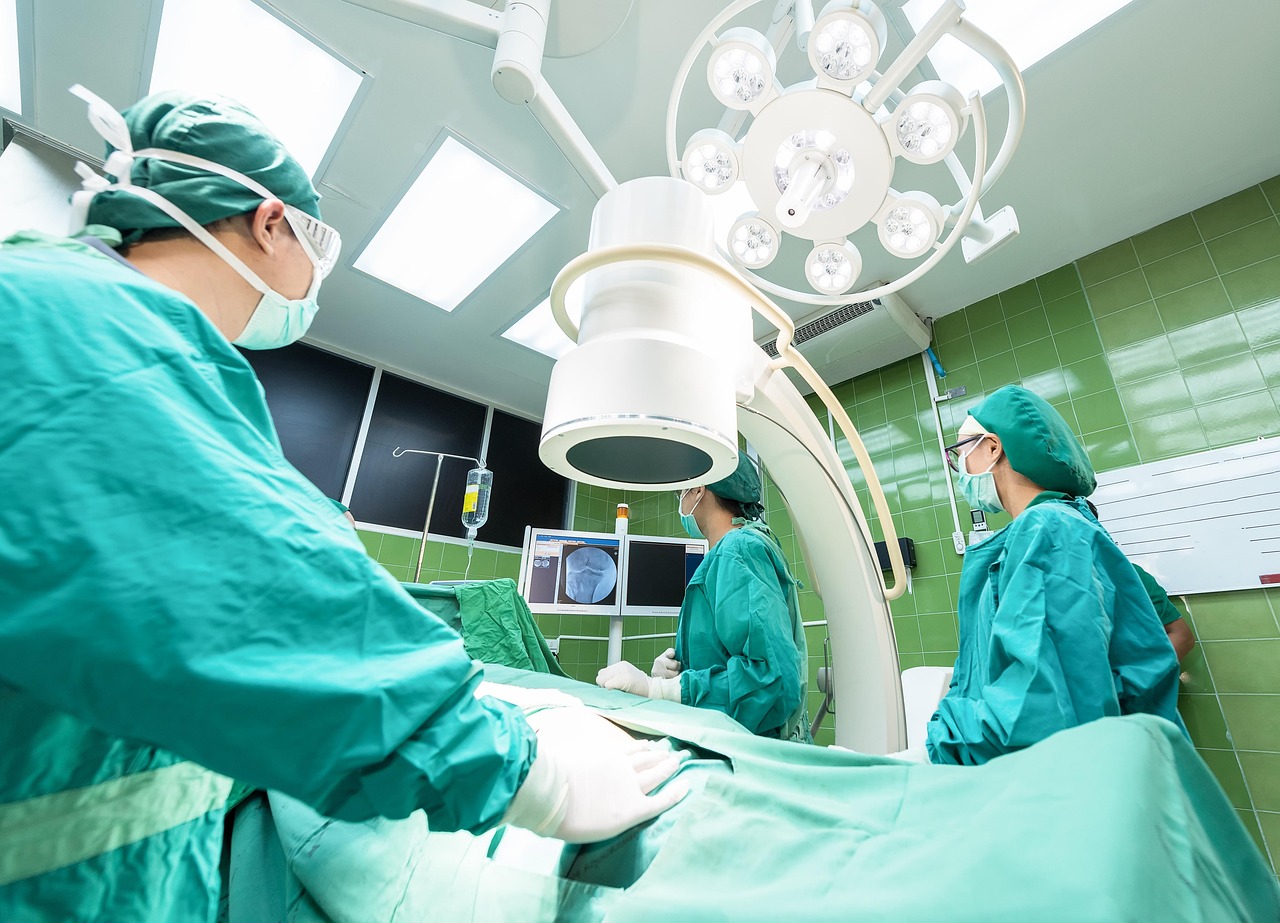
It conjures a machine bending over a patient, making decisions, cutting on its own judgement. That is not what happens. In an operating room running the world’s most common surgical robot, the machine is not the surgeon. It’s the surgeon’s hands, relocated a few feet away — and it does not do a single thing the surgeon doesn’t tell it to, in real time.
Understanding that gap between the image and the reality is the key to understanding both how far medical robotics has come, and how far it still has to go.
What the da Vinci actually is
The dominant system, made by a company called Intuitive and named da Vinci, is genuinely everywhere now. In 2024 alone, surgeons performed roughly 2.68 million procedures with it — up around 17% in a single year — and that number climbs every year. By any measure it’s one of the most successful robots ever built.
But here’s how it works. The surgeon sits at a console, sometimes across the room from the patient, looking into a high-definition 3D view of the surgical field. Their hands grip controls. As they move, the robot’s several arms — tipped with tiny instruments inside the patient’s body — mirror those movements exactly. It’s called teleoperation: remote human control, with no independent decision-making by the machine at all.
What the robot adds isn’t judgement. It’s superhuman steadiness and precision. It filters out the natural tremor in a human hand. It scales motion down, so a two-centimetre movement of the surgeon’s hand becomes a two-millimetre movement of the instrument. It bends and rotates in tight spaces a human wrist can’t reach, through incisions smaller than a fingertip. The result is less bleeding, smaller scars, faster recovery — real benefits for real patients. But the intelligence in the room is still entirely biological.
Why “the robot did it” is a useful fiction
If the human is doing all the deciding, why call it a robot at all? Because the machine changes what the human is capable of. A surgeon operating through da Vinci can do things — in dexterity, in precision, in access — that the same surgeon’s bare hands cannot. It’s less a robot in the sci-fi sense than a very sophisticated power tool: a translator that turns skilled human intention into steadier, smaller, more precise action than a body can manage alone.
That framing matters, because it tells you exactly what today’s “surgical robot” is not: it is not autonomous, not self-directed, and not — despite the marketing shimmer of the word “robot” — making medical choices. When something goes wrong on the table, a person is deciding what to do about it, always.
The line that’s starting to move
Which brings us to the genuinely futuristic part, and the reason this is worth watching closely.
At Johns Hopkins, researchers have spent years developing a very different kind of machine — the Smart Tissue Autonomous Robot, or STAR — designed not to mirror a surgeon but to actually perform a step of surgery itself. Soft-tissue surgery is the hard case: unlike bone, soft tissue is slippery, deformable, and never twice the same, which is exactly why it had stayed a human monopoly.
STAR crossed real milestones. It performed autonomous procedures on the intestines of live animals — connecting soft, moving tissue with sutures — and in some tests produced results as good as or better than human surgeons doing the same task. More recently, the Hopkins team reported a robot performing a realistic operation with minimal human help, having learned in part by watching video of surgeries. This is no longer mirroring a human. This is a machine executing surgical steps on its own.
The question we’ll have to answer
None of this means an autonomous robot will be operating on you next year. These are careful research milestones, mostly in animals, hemmed in by enormous questions of safety, regulation, and liability. The gap between “did it in a lab on a pig” and “approved to do it on your grandmother” is exactly the kind of long, unglamorous chasm that self-driving cars spent fifteen years crossing.
But the direction is unmistakable. Today’s surgical robot is a brilliant instrument with a human mind behind every motion. Tomorrow’s may make some of those motions itself — and then we’ll have to decide, as patients and as a society, how much of the most intimate thing one human can do to another we’re willing to hand to a machine.
For now, the reassuring truth holds: the robot in the operating room doesn’t operate. A person does. It’s the two words “for now” that should have your attention.
Sources & further reading
Researched and written with the help of AI tools and edited for accuracy. Provided for general information and discussion only — not professional advice. See our editorial standards and disclaimer. Spotted an error? Tell us.
Enjoyed this? Get the next one.
One good read at a time, straight to your inbox. No spam, unsubscribe anytime.